
Update 8/5/2026:
Due to current outbreak, results available 14-21 days instead of 2-4 days.
Patient Preparation: Patient should avoid use of antidiarrheal medication (eg, loperamide [Imodium-AD] or Pepto-Bismol)at least 24 hours prior to collection. The presence of barium will interfere with this test.
Unpreserved stool must be sent to hospital laboratory within 48 hours of collection and kept refrigerated. Due to specimen integrity, unpreserved specimens should not be collected on Saturdays.
Synonyms
CYCL, Cyclospora cayetanensis, gastroenteritis, CLB, Coccidian like bodies, Cyanobacter like Bodies, Cyclospora cayetanensis, Cyclospora Stain, Stool, Cyclosporiasis, parasite
Ordering Instructions
Useful For
Identifying Cyclospora cayetanensis as a cause of infectious gastroenteritis
Ordering Guidance (Per Mayo Clinic Laboratories)
Cryptosporidium oocysts do not reliably stain with the modified safranin stain. If Cryptosporidium is suspected, the specific enzyme-linked immunosorbent assay for this organism is recommended; order CRYPS / Cryptosporidium Antigen, Feces. To detect this organism as well as other common infectious causes of diarrhea, order GIP / Gastrointestinal Pathogen Panel, PCR, Feces.
Patient Preparation:
Patient should avoid use of antidiarrheal medication (eg, loperamide [Imodium-AD] or Pepto-Bismol).
The presence of barium will interfere with this test.
Specimen Collection
Collection Instructions
Submit only 1 of the following specimens:
PREFERRED
Specimen Type: Preserved Stool
Container/Tube:
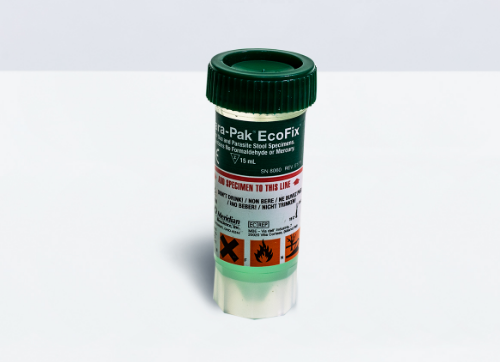
- Preferred: ECOFIX Stool Transport Vial (Mayo Clinic Laboratories: ECOFIX Stool Transport Vial (Kit) (T219))
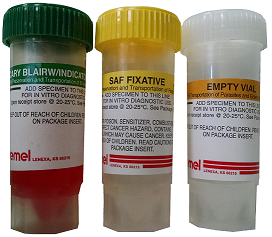
- Acceptable: Sodium Acetate Formalin ("SAF Fixative" of the Stool Collection Kit)
- Acceptable: 10% Buffered Formalin Stool Transport (Kit) (Mayo Clinic Laboratories: Formalin-Meridian 10% Buffered Neutral (T466))
Specimen Volume: 10g (minimum volume: 1g)
Specimen Stability Information: Ambient 21 days (preferred)/Refrigerated 21 days
ACCEPTABLE
Specimen Type: Unpreserved stool
Container/Tube: Stool container or "Empty Vial"
Specimen Volume: 5g (minimum volume 2g)
Specimen Stability Information: Refrigerated 3 days (Do not collect unpreserved specimens on Saturdays)
Rejection Criteria
- Specimens not collected and processed as indicated.
- Frozen.
- All specimens will be evaluated at Mayo Clinic Lab for test stability.
Specimen Stability and Storage
Random Stool in EcoFix
- Room Temperature (20-26°C or 68-78.8°F): 21 days
- Refrigerated (2-8°C or 36-46°F): 21 days
- Frozen (-20°C/-4°F or below): Unacceptable
- Room Temperature (20-26°C or 68-78.8°F): Unacceptable
- Refrigerated (2-8°C or 36-46°F): 3 days
- Frozen (-20°C/-4°F or below): Unacceptable
Specimen Storage in Department Prior to Disposal: 3 days
Specimen retention time is determined by the policy of the Reference Laboratory. Contact the Send Outs Laboratory with any questions.
Performed
Monday through Saturday. Report available: 2 to 4 days
Update 7/21/2026:
Turnaround time for the Cyclospora Stain order has slowed with results currently taking upwards of a week to be available.
Reference Range
Negative
If positive, reported as Cyclospora cayetanensis detected.
Clinical Information
Cyclospora cayetanensis is an apicomplexan protozoan parasite that causes watery diarrhea, anorexia, malaise, and weight loss.(1) The extent of symptoms depends on the age and health of the host and the infectious dose of oocysts. The infection is usually self-limited, but symptoms can be severe and prolonged, particularly in immunocompromised patients. Cyclosporal diarrheal disease is endemic in many parts of the world, including parts of Asia, India, Southeast Asia, and Latin America. Although most cases of cyclosporiasis have been seen in travelers to developing countries, outbreaks in the United States are now seen each year associated with contaminated fruits and vegetables from Latin America. Transmission is via ingestion of fecally contaminated food or water. If untreated, symptoms may last for several weeks and may follow a relapsing course. The infection usually responds to treatment with a sulfamethoxazole-trimethoprim drug combination.
C cayetanensis oocysts are traditionally detected by modified acid-fast staining in which the oocysts stain bright pink red.(1,2) However, the modified safranin stain has been shown to provide increased sensitivity over the modified acid-fast method and produces a more rapid result. It is the method used in the Mayo Clinic Parasitology Laboratory to detect C cayetanensis oocysts in fecal sediment.
For more information about diagnostic tests that may be of value in evaluating patients with diarrhea see the following:
-Laboratory Testing for Infectious Causes of Diarrhea
-Parasitic Investigation of Stool Specimens Algorithm
Cautions
The full spectrum of disease and the extent of carriage without disease have not been determined. In addition, the exact sensitivity and specificity of the stain have also not been determined.
Cryptosporidium oocysts do not reliably stain with the modified safranin stain. If Cryptosporidium is suspected, the specific enzyme-linked immunosorbent assay (CRYPS / Cryptosporidium Antigen, Feces) for this organism is recommended. Alternatively, the GIP / Gastrointestinal Pathogen Panel, PCR, Feces may be performed to detect this organism as well as other common infectious causes of diarrhea.
Interpretation
A report of "Cyclospora cayetanensis detected" indicates the presence of this parasite in the patient's feces.
Performing Laboratory
Mayo Clinic Laboratories
Methodology
CPT Code
87015
87207
Resources and References
1.Centers for Disease Control and Prevention (CDC) Global Health, Division of Parasitic Diseases and Malaria. Parasites–Cyclosporiasis (Cyclospora infection). CDC; Updated March 12, 2020. Accessed October 31, 2022. Available at www.cdc.gov/parasites/cyclosporiasis/index.html
2. Garcia LS, Arrowood M, Kokoskin E, et al: Practical guidance for clinical microbiology laboratories: Laboratory diagnosis of parasites from the gastrointestinal tract. Clin Microbiol Rev. 2017 Nov 15;31(1):e00025-17
Forms
If not ordering electronically, complete, print, and send 1 of the following forms with the specimen:
-Microbiology Test Request (T244)
-Gastroenterology and Hepatology Test Request (T728)
For other diagnostic tests that may be of value in evaluating patients with diarrhea; the following are available: